How to Manage Heat in Mining Infrastructure in 2026?

Time:2026-10-21 Author:Henry
0%

Managing heat will define the reliability of mining infrastructure in 2026. High-density servers, ASIC miners, transformers, and power systems generate intense heat within confined facilities. If that heat remains trapped, performance declines quickly. Fans become louder. Hardware ages faster. Energy costs rise.

Roger Schmidt, an ASHRAE Fellow and data-center cooling specialist, has stated, “There is no one-size-fits-all solution for data center cooling.” That warning also applies to mining operations. A remote site in northern Canada needs a different strategy from a containerized facility in Texas. Climate, electricity prices, water access, dust, and equipment density all change the answer.

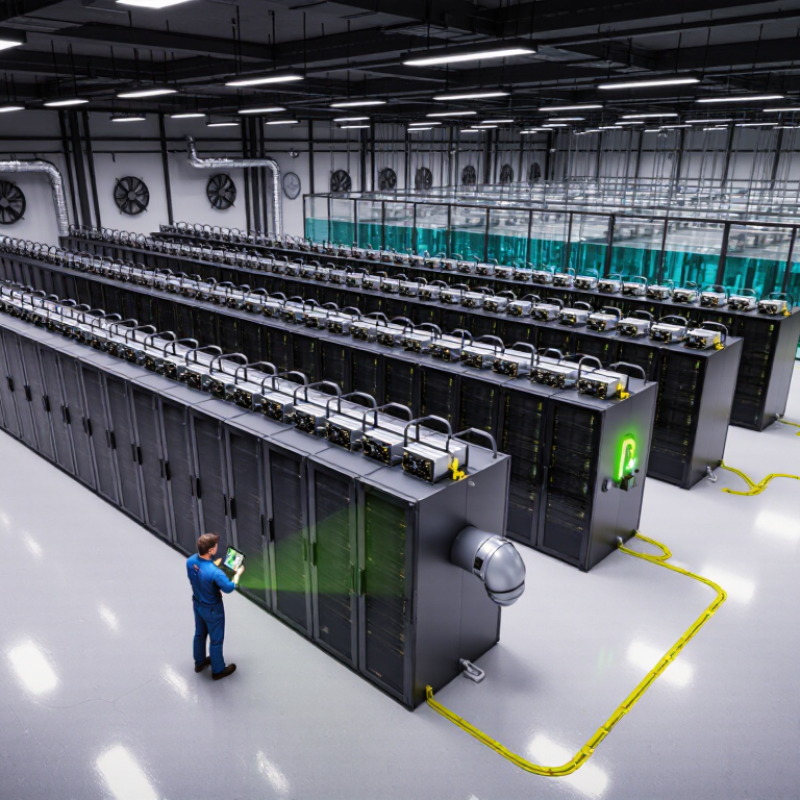
This guide examines how to manage heat in mining infrastructure through practical, measurable decisions. It explores airflow mapping, hot-aisle containment, liquid cooling, immersion systems, heat recovery, and intelligent monitoring. A thermal camera can reveal a blocked vent within minutes. A properly placed sensor can identify rising rack temperatures before shutdowns occur. Small details matter.

Still, cooling plans are rarely perfect. Operators may overestimate free-air cooling or underestimate seasonal humidity. Some facilities install oversized systems that waste power. Others delay maintenance until temperatures become dangerous. That approach is expensive.

Reliable thermal management requires testing, documentation, and regular adjustment. The strongest design balances uptime, efficiency, maintenance access, and environmental conditions. In 2026, the question is not simply how to remove heat. It is how to control heat without creating a larger energy problem.
How to Manage Heat in Mining Infrastructure in 2026?

Defining Heat Challenges in Mining Infrastructure

Heat in mining infrastructure is not one problem. It comes from rock depth, machinery, electrical systems, and compressed air. In deep workings, the geothermal gradient raises the surrounding rock temperature. Diesel engines add radiant heat, while pumps and conveyors release additional heat into confined areas. Moisture matters too. Sweat evaporates slowly.

Surface facilities face different pressures. Crushers, mills, and power rooms can produce intense heat within a few metres. Control rooms may stay cool, while adjacent maintenance zones become uncomfortable and unsafe. Battery charging areas can also develop heat during high-load cycles. During site inspections, technicians should record air temperature, humidity, air velocity, and radiant heat. A thermal camera can reveal hot bearings, overloaded cables, and poorly insulated pipes.

The difficult part is identifying combined exposure. Ventilation may move air without removing enough heat. Engineers should compare readings across shifts, seasons, and production rates. Sensors need careful placement near work faces, equipment, and rest areas. One blind spot can distort the assessment. Some projects rely too heavily on average temperature. That assumption misses short, severe heat peaks. Operators also need practical observations, such as dizziness, soaked clothing, slower work, or repeated breaks. A reliable assessment connects these reports with instrument data and maintenance records, rather than treating heat as a single number.

Mapping Heat Sources Across Mining Operations

How to Manage Heat in Mining Infrastructure in 2026?

Mapping Heat Sources Across Mining Operations

Heat rarely comes from one machine. Underground rock temperature rises with depth, while diesel loaders, electric drills, conveyors, pumps, and compressors add local heat. Crushing and milling create frictional heat and fine dust. Server rooms add another hidden load through continuous computing and network equipment.

The International Energy Agency’s Energy Efficiency 2024 report states that industry consumed about 37% of global final energy in 2023. That figure makes every wasted kilowatt a thermal problem, not only an energy problem.

Map heat by location and operating condition. Place sensors near tunnel faces, substations, hydraulic systems, motor bearings, compressor rooms, and control cabinets. Compare readings during shifts, maintenance, and production peaks.

Compressed-air leaks deserve attention. U.S. Department of Energy guidance estimates leaks can waste 20–30% of compressor output. That lost energy becomes noise, pressure loss, and unwanted heat. Cooling the whole site may be the wrong answer.

Tips: Build a heat map before buying larger cooling equipment. Check airflow at worker height, not only ceiling level. Insulate hot pipelines, clean blocked radiators, and schedule high-load equipment during cooler periods. Review sensor placement twice; one poorly positioned probe can create false confidence. A perfect model is unlikely. Real mines change hourly.

Selecting Cooling and Ventilation Strategies

How to Manage Heat in Mining Infrastructure in 2026?

Selecting Cooling and Ventilation Strategies

In 2026, mining operators must treat heat as an operational risk, not merely a comfort issue. Underground temperatures rise with depth, equipment load, rock conditions, and restricted airflow. A reliable plan starts with measured data. Install sensors near working faces, electrical rooms, haulage routes, and refuge areas. Record temperature, humidity, airflow, and equipment heat output during different shifts.

Data reveals practical weaknesses. A tunnel may show acceptable average airflow while one corner remains dangerously hot. Adjustable ventilation controls can redirect air toward active zones. Auxiliary fans, insulated ducting, and localized cooling units can support deeper work areas. Surface air cooling may suit large operations, while spot cooling can reduce energy use in smaller zones. Choose based on mine geometry, production schedules, maintenance access, and emergency requirements.

Keep it serviceable.

Water-based cooling systems can perform well, but poor filtration may block nozzles and reduce performance. Mechanical cooling adds capacity, yet it also increases power demand and maintenance work. We once underestimated heat from idling machinery near a ventilation return. The model looked accurate; the field result did not. That mistake reinforces the need for thermal surveys and regular airflow verification.

Operators should compare designs through documented risk assessments and local safety requirements. Maintenance teams need clear inspection routines, spare components, and alarm thresholds. A strategy that works in winter may fail during a humid summer shift. Conditions change. Monitoring must change with them.

Integrating Thermal Monitoring and Automation

Mining infrastructure will face tighter thermal margins in 2026. The U.S. Department of Energy reported that data centers used about 176 terawatt-hours of electricity in 2023. It projects consumption could reach 325–580 terawatt-hours by 2028. Mining sites add concentrated heat, often inside dense racks with limited airflow.

Thermal monitoring should move beyond room temperature. Install sensors at rack inlets, chip outlets, coolant lines, and exhaust points. Sample readings every few seconds. A dashboard can compare hot spots against safe operating thresholds. The International Energy Agency expects global data-center electricity demand to more than double by 2030. That pressure makes early detection valuable, not optional.

Automation can adjust fan speed, cooling flow, workload intensity, or rack power limits. A temperature spike near one cabinet should trigger a local response first. Human operators still need clear alarms and override controls. No model is perfect. Sensor drift, blocked filters, and uneven airflow can create false confidence. The Uptime Institute’s operational surveys repeatedly identify human error and system complexity as major reliability concerns. Teams should test alerts during realistic heat events, record every intervention, and review failures honestly. Sometimes the automation reacts too slowly. That lesson matters.

Maintaining Energy-Efficient Heat Resilience in 2026

How to Manage Heat in Mining Infrastructure in 2026?

Maintaining Energy-Efficient Heat Resilience in 2026

In 2026, heat resilience starts with measurement, not bigger cooling equipment. In a mining facility, technicians should map temperatures at racks, switch rooms, battery areas, and exhaust ducts. Small sensors can record five-minute changes and expose hot zones hidden by average readings. Keep inlet air below equipment limits, but avoid overcooling empty aisles. That wastes electricity. Experienced teams also inspect filters, cable routes, and blocked vents during busy shifts. A clean airflow path often delivers more value than another chiller.

Energy efficiency improves when cooling follows real demand. Variable-speed fans, sealed doors, and contained hot and cold aisles reduce air mixing. Heat recovery can warm offices, workshops, or nearby water systems when safety controls permit. Thermal storage may shift cooling loads away from expensive peak hours. Engineers should verify every saving with power meters, temperature logs, and maintenance records. Rules differ by location. Design decisions must respect electrical, fire, ventilation, and environmental requirements.

Resilience also needs failure planning. Keep redundant pumps, manual override controls, and tested alarms ready for extreme heat or grid interruptions. Run drills with operators, not only software. One uncomfortable lesson is that dashboards can look healthy while a single sensor has failed. We should question clean data. Maintenance budgets are often cut first, yet neglected filters raise fan energy and shorten equipment life. No design is perfect. Review the thermal plan after each incident, including small ones, and adjust airflow, staffing, and backup capacity before the next hot season.

How to Manage Heat in Mining Infrastructure in 2026? - Maintaining Energy-Efficient Heat Resilience in 2026

Practical heat-management benchmarks for mining facilities, processing areas, electrical rooms, underground operations, and digital infrastructure.

Infrastructure Area Primary Heat Source Operational Metric Recommended 2026 Target Energy-Efficient Control Heat-Resilience Action Monitoring Frequency
Underground Workings Geothermal heat, diesel equipment, blasting, and compression Wet-bulb temperature and air velocity Keep conditions within the applicable occupational exposure limits and site heat-stress plan Demand-controlled ventilation using variable-speed fans and airflow zoning Add refuge areas, chilled-air capacity, hydration points, and work-rest triggers Continuous for temperature, humidity, and airflow
Processing Plant Crushing, milling, flotation, conveyors, pumps, and motors Equipment surface temperature and motor winding temperature Maintain equipment within the manufacturer’s rated operating range Use high-efficiency motors, variable-frequency drives, and optimized pump control Install thermal alarms, automatic shutdowns, spare cooling capacity, and planned maintenance Every 1–5 minutes for critical assets
Electrical Substations Transformer losses, switchgear, cable resistance, and ambient heat Transformer top-oil or winding temperature Operate below the equipment’s thermal rating with alarm and trip thresholds configured Improve power factor, balance loads, and use efficient transformer cooling modes Provide redundant cooling, temperature relays, fire detection, and emergency load shedding Continuous with event logging
Control Rooms and Data Centers Servers, networking equipment, uninterruptible power systems, and batteries Server inlet temperature, relative humidity, and PUE Use the applicable data-center environmental operating envelope and maintain stable humidity Hot-aisle/cold-aisle separation, blanking panels, airflow containment, and free cooling where climate permits Install N+1 cooling, dual power paths, battery thermal monitoring, and tested backup procedures Continuous; alarm escalation within 1 minute
Diesel and Mobile Equipment Engines, exhaust systems, hydraulic systems, and radiators Coolant temperature, hydraulic-oil temperature, and exhaust temperature Remain below manufacturer alarm limits during the full duty cycle Reduce idling, maintain radiators, optimize routes, and use condition-based servicing Use automatic derating, fire suppression, thermal inspections, and defined cool-down procedures Telemetry every 10–60 seconds
Water-Cooling Systems Heat exchangers, pumps, compressors, and process heat Supply/return temperature difference and flow rate Maintain design flow and temperature difference without excessive pumping energy Use variable-speed pumps, filtration, heat recovery, and set-point optimization Provide bypass lines, stored water, redundant pumps, and leak detection Every 1–5 minutes during operation
Renewable Power and Battery Storage Solar inverters, power electronics, battery charging, and direct solar gain Battery temperature and state of charge Keep batteries within the supplier-defined operating temperature range Apply charge-rate control, shaded enclosures, passive ventilation, and thermal-aware dispatch Use thermal runaway detection, compartmentalization, emergency isolation, and suppression systems Continuous with independent safety alarms
Workshops and Maintenance Buildings Welding, engines, compressors, charging equipment, and solar heat gain Indoor temperature, ventilation rate, and airborne contaminants Meet applicable workplace ventilation and heat-exposure requirements Use occupancy-based ventilation, destratification fans, insulation, and daylight control Create shaded recovery areas, maintain emergency ventilation, and schedule high-heat tasks during cooler periods At least hourly; continuous for high-risk tasks
Implementation note: Final temperature, humidity, airflow, alarm, and work-rest limits should be confirmed against local occupational-health regulations, electrical codes, equipment manuals, and the site-specific risk assessment.

FAQS

Why should mining sites create a heat map before buying larger cooling equipment?

Heat often comes from several sources, not one machine. A heat map shows where cooling is truly needed. Cooling the whole site may waste energy.

Which areas should receive thermal sensors?

Place sensors near tunnel faces, substations, motor bearings, compressors, hydraulic systems, and control cabinets. Check airflow at worker height. Ceiling readings can mislead.

When should operators compare temperature readings?

Compare readings during shifts, maintenance, and production peaks. Conditions change hourly. One quiet shift cannot represent the whole operation.

How do compressed-air leaks increase heat and energy waste?

Leaks can waste a significant share of compressor output. Lost energy becomes pressure loss, noise, and unwanted heat. Inspect leaking lines regularly.

What practical actions can reduce mining heat?

Insulate hot pipelines and clean blocked radiators. Schedule high-load equipment during cooler periods. Small maintenance tasks can prevent larger thermal problems.

How should server rooms and equipment racks be monitored?

Measure rack inlets, chip outlets, coolant lines, and exhaust points. Room temperature alone misses local hot spots. Dense racks need closer attention.

What can automated thermal controls adjust?

Automation can change fan speed, cooling flow, workload intensity, or rack power limits. A local temperature spike should trigger a local response first. Full-site reactions may be excessive.

Why do human operators still matter in automated cooling systems?

Operators need clear alarms and override controls. Sensor drift, blocked filters, and uneven airflow can create false confidence. Automation sometimes reacts too slowly. That lesson matters.

Conclusion

Mining operations in 2026 face growing heat challenges caused by deeper work areas, high-powered machinery, electrical systems, compressed air, friction, and changing outdoor conditions. Understanding how to manage heat in mining infrastructure begins with mapping these sources across shafts, tunnels, processing zones, workshops, and equipment rooms. This assessment helps teams identify dangerous hotspots, predict thermal buildup, and prioritize practical control measures that protect workers, equipment, and production continuity.

Effective heat management combines suitable ventilation, localized cooling, airflow control, insulation, and well-planned maintenance. Thermal sensors and automated monitoring can provide continuous information on temperature, humidity, airflow, and equipment performance, allowing timely adjustments before conditions become unsafe. In 2026, resilient mining infrastructure should also focus on energy efficiency by coordinating cooling systems with ventilation demand, recovering usable heat where possible, reducing unnecessary power consumption, and reviewing performance regularly. A balanced strategy supports safer operations while improving reliability, sustainability, and long-term operational efficiency.

Henry

Henry

Henry is a dedicated marketing professional with a profound expertise in the company's offerings. With years of experience in the industry, he possesses an impressive understanding of the market dynamics and consumer behaviors that drive success. Henry is committed to sharing his insights through......