What Is a Modular Data Center Solution Top Benefits

Time:2026-10-01 Author:Liam
0%

As digital services expand, organizations need data centers that arrive faster, scale carefully, and remain operational under pressure. This raises a practical question: what is a modular data center solution? It is a prefabricated facility or infrastructure unit, assembled in controlled factory conditions and deployed on-site. Modules may include power systems, cooling equipment, racks, fire protection, and monitoring controls.

The need is measurable. The International Energy Agency reported that data centers consumed about 240 terawatt-hours of electricity globally in 2022. Its 2024 analysis projects consumption could more than double by 2026, driven partly by artificial intelligence workloads. That growth makes efficient cooling and predictable power design increasingly important. Uptime Institute’s Global Data Center Survey 2023 also found that power problems remained a leading cause of significant outages. Reliability cannot be treated as a decorative feature.

Modular designs can shorten construction schedules, support phased capacity, and reduce some site-based installation work. The advantages look convincing on paper. Yet the solution is not automatically cheaper or greener. Transport limits, local permitting, climate conditions, maintenance access, and integration with existing systems can change the result. A compact module still needs skilled commissioning and disciplined monitoring.

This article examines the top benefits of modular data center solutions, including deployment speed, scalability, energy performance, and operational resilience. It also considers the trade-offs that buyers sometimes overlook. Real value depends on the application. A regional edge site, a cloud campus, and an AI facility may require very different modular strategies.
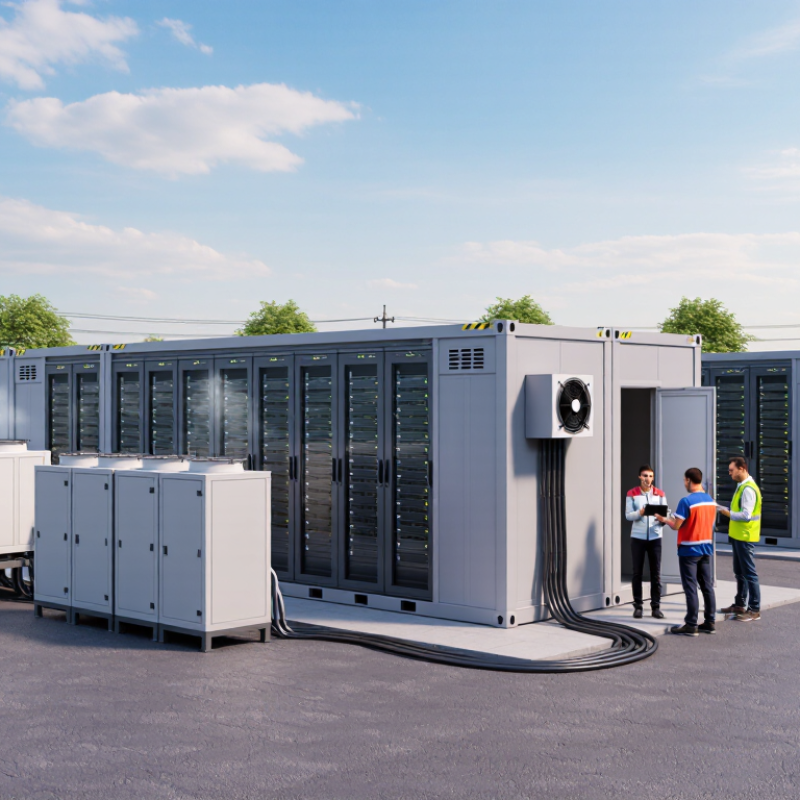
What Is a Modular Data Center Solution Top Benefits

What Is a Modular Data Center Solution?

What Is a Modular Data Center Solution?

A modular data center solution is a pre-engineered facility built from repeatable modules. Each module can contain racks, power systems, cooling equipment, fire detection, and monitoring controls. Instead of constructing every room on site, teams assemble tested sections in a factory. These sections may arrive as compact rooms, containers, or integrated rack enclosures. The final design depends on capacity, climate, security requirements, and local building rules.

In practice, an operator might deploy four racks near a remote production site. Power distribution, cable pathways, and cooling are planned before delivery. Technicians then connect the modules, test alarms, and verify airflow. This approach can shorten installation work and make capacity easier to expand. A new module may be added when computing demand grows. However, speed is not automatic. Transport access, foundation strength, utility capacity, and maintenance space still require careful site checks.

A reliable solution should include documented load calculations, temperature limits, redundancy targets, and inspection records. Independent testing can confirm electrical safety and fire protection performance. Operators should also review noise, water use, spare parts, and emergency procedures. Modular systems are not universally better. A poorly matched module can create heat concentration, awkward maintenance routes, or expensive retrofits. That weakness matters. Good engineering treats modular construction as a method, not a shortcut, and measures performance after deployment.

How Modular Data Centers Are Designed and Deployed

A modular data center begins with a load profile, not a shipping container. Engineers map rack density, cooling demand, redundancy, security, and future expansion. Power modules commonly use separated electrical paths, while cooling modules may combine chilled water, direct expansion, or liquid cooling. The choice depends on climate and equipment. It is easy to overdesign.

The International Energy Agency estimates that data centers consumed about 460 TWh globally in 2022. Its Electricity 2024 report projects demand could exceed 1,000 TWh by 2026.

Efficient design is therefore practical, not cosmetic. Engineers should model power usage effectiveness, airflow, and seasonal temperatures before fabrication.

The Uptime Institute’s 2023 survey found that 66% of reported outages could have been prevented through better management, processes, or configuration.

Commissioning must be strict. Technicians test alarms, backup power, fire protection, network paths, and failover under realistic loads. A factory acceptance test checks the assembled modules before delivery. Site acceptance testing verifies foundations, utilities, grounding, and monitoring after installation.

Deployment then becomes repeatable: prepare the pad, connect utilities, install modules, integrate controls, and validate performance.

Still, transport limits, local permits, and unexpected soil conditions can disrupt schedules. Modular construction reduces site work, but it does not remove engineering risk. Each expansion should be reviewed against actual workloads, not optimistic forecasts.

What Components Make Up a Modular Data Center?

What components make up a modular data center? The answer is more than a container filled with servers. A reliable solution combines prefabricated racks, power distribution, cooling equipment, network connections, monitoring controls, physical security, and fire protection. These parts must work as one system.

The IT layer includes server racks, storage units, cable pathways, and structured network cabinets. Power systems add switchgear, uninterruptible power supplies, batteries, and backup generators. Cooling may use in-row units, air handlers, or liquid cooling loops for dense workloads. The International Energy Agency estimates that data centers consumed about 240–340 terawatt-hours of electricity in 2022. Therefore, cooling and power design directly affect operating cost and sustainability.

The physical module protects this equipment from dust, humidity, vibration, and unauthorized access. Sensors track temperature, smoke, leaks, energy use, and battery health. Monitoring software then sends alerts before a small fault becomes an outage. The Uptime Institute’s 2024 Global Data Center Survey reported that 53% of respondents experienced an outage during the previous three years. That figure deserves attention.

Modular deployment can shorten construction time. Yet, it does not remove design risks. Poor cable planning or undersized cooling can create expensive limits later. In practice, teams should test load growth, maintenance access, local electrical rules, and emergency procedures before installation. A compact module is useful. It is not automatically resilient.

What Is a Modular Data Center Solution? Top Benefits and Components

Category Dimension Typical Data or Configuration Practical Significance
Definition Modular data center solution A pre-engineered, prefabricated data center system assembled from standardized modules. It integrates information technology, power, cooling, physical security, monitoring, and fire protection into a scalable deployment model.
Deployment Construction approach Factory-built modules are delivered to the site for installation, connection, testing, and commissioning. Factory assembly can improve quality consistency and reduce the amount of on-site construction compared with a conventional facility.
Scalability Capacity expansion Additional racks, power modules, cooling units, or complete data hall modules can be added as demand grows. Organizations can align capital investment with actual workload growth instead of building the entire ultimate capacity at the beginning.
Benefit Deployment speed Parallel factory fabrication and site preparation can shorten the overall project schedule. Faster deployment is useful for edge computing, temporary capacity, disaster recovery, and locations with urgent IT requirements.
Benefit Cost control Standardized designs, repeatable manufacturing, and phased capacity additions help improve budget predictability. The final cost still depends on site work, redundancy, utility availability, security requirements, and the selected IT load.
Benefit Energy efficiency Efficient cooling control, airflow management, variable-speed equipment, and intelligent power monitoring. These measures can reduce wasted energy and support improved power usage effectiveness when properly designed and operated.
Benefit Operational flexibility Containerized, skid-mounted, room-based, or building-block configurations. The solution can be adapted to remote sites, constrained buildings, industrial facilities, telecom locations, and enterprise environments.
Benefit Quality control Subsystem integration and functional testing can be performed in a controlled factory environment. Pre-commissioning helps identify interface problems before delivery, although site acceptance testing remains essential.
Benefit Resilience Redundant power, cooling, network paths, monitoring, and backup systems can be incorporated into the design. The required resilience level should be selected according to uptime objectives, maintenance procedures, and business continuity needs.
Component IT equipment space Racks, cabinets, structured cabling, cable pathways, and equipment containment. This area houses servers, storage, network equipment, and other technology assets while supporting organized airflow and maintenance access.
Component Power distribution Main switchgear, distribution boards, power distribution units, busways, and branch circuits. The electrical distribution system delivers safe and measurable power from the utility or generator source to the IT load.
Component Backup power Uninterruptible power supplies, batteries, automatic transfer equipment, and standby generators where required. Backup systems maintain service during power disturbances and provide time for controlled shutdown or generator-supported operation.
Component Cooling system Computer room air conditioning, computer room air handlers, in-row cooling, or liquid-cooling support. Cooling capacity must match the IT heat load, environmental conditions, airflow design, and future expansion plan.
Component Environmental control Temperature, humidity, airflow, leak detection, and differential-pressure monitoring. Continuous environmental monitoring helps protect equipment and enables early intervention when operating conditions move outside defined limits.
Component Fire protection Fire detection, alarm systems, suppression systems, emergency controls, and compartmentation. The design should comply with applicable fire codes and coordinate detection and suppression with equipment protection and personnel safety.
Component Physical security Controlled access, locks, surveillance, intrusion detection, security zoning, and visitor management. Layered security controls restrict unauthorized access to critical infrastructure and create an auditable record of entry.
Component Network connectivity Fiber and copper pathways, patching areas, network racks, carrier entry points, and diverse cable routes. Connectivity infrastructure supports reliable communications and can provide physical separation for improved network resilience.
Component Management platform Infrastructure monitoring, power and cooling analytics, alarms, reporting, and remote management interfaces. Centralized visibility helps operators track capacity, energy use, environmental conditions, alarms, and maintenance requirements.
Design Availability planning Redundancy options may include N, N+1, 2N, or other architectures selected for the required service objective. Redundancy should be evaluated together with maintainability, fault tolerance, operating cost, and the consequences of downtime.
Planning Key site considerations Available utility power, network access, floor loading, climate, local regulations, physical security, and expansion space. A modular solution still requires careful site assessment, because infrastructure limitations can affect capacity, schedule, cost, and compliance.

What Are the Main Benefits of Modular Data Centers?

Modular data centers offer a practical answer to rising capacity demands. Prefabricated power, cooling, and server modules can be assembled off-site, then installed with fewer construction delays. This approach helps organizations expand in measured stages, rather than building a large facility before demand is certain. The IEA’s Electricity 2024 report estimates that data centers used about 460 terawatt-hours globally in 2022. Their electricity use could exceed 1,000 terawatt-hours by 2026. Modular designs can support efficiency through standardized cooling and power systems, but efficiency is not automatic.

They also improve deployment flexibility and operational resilience. A failed module may be isolated while other units continue serving workloads. Uptime Institute’s 2024 Global Data Center Survey found that 54% of respondents experienced an outage during the previous three years. That figure shows why maintainable designs matter. However, modular systems still require careful site planning, skilled commissioning, and reliable utility connections. They are not a magic shortcut.

Tips: Define future capacity before choosing module sizes. Measure power usage effectiveness after commissioning, not only in design documents. Leave service space around each module. Test backup power under realistic loads. Teams should also review local climate data, because cooling performance can change sharply between seasons. A small pilot deployment may reveal integration problems early, although it can increase the initial cost. That trade-off deserves honest review.

When Should Organizations Choose a Modular Data Center Solution?

What Is a Modular Data Center Solution Top Benefits

Organizations should choose a modular data center when capacity must grow faster than construction schedules. This approach suits remote sites, temporary workloads, disaster recovery, and buildings with limited floor space. A factory-built module can arrive with power, cooling, racks, and monitoring already integrated. Less site work matters when every week affects service availability.

Energy planning also supports this decision. The International Energy Agency’s Electricity 2024 report estimates that data centers consumed about 460 terawatt-hours globally in 2022. That demand could exceed 1,000 terawatt-hours by 2026. Modular systems can add efficient cooling zones as workloads increase, instead of cooling an entire oversized hall. The U.S. Department of Energy’s 2024 data center report projects American data centers may consume 6.7% to 12% of national electricity by 2028. Efficiency is no longer a minor design preference.

However, modular construction is not automatically the best answer. Organizations with stable demand, abundant space, and a long construction window may prefer a conventional facility. Integration can also become difficult when existing electrical systems are old or undocumented. That risk is easy to underestimate. A practical assessment should compare delivery time, maintenance access, expansion frequency, local climate, and utility limits. Choose modular deployment when uncertainty has a measurable cost, not merely because the solution appears faster.

What Is a Modular Data Center Solution? Top Benefits and When to Choose One

Modular data centers use prefabricated, factory-built modules for power, cooling, IT space, and supporting infrastructure. They are often considered when an organization needs faster deployment, predictable expansion, limited on-site construction, or capacity in a constrained location.

The chart compares commonly cited industry planning ranges for deployment lead time. Actual schedules vary with site readiness, permitting, utility availability, design complexity, and required capacity. Modular solutions are most suitable when speed, phased growth, repeatable deployment, or reduced site disruption is a priority.

FAQS

What is a modular data center solution?

It is a pre-engineered facility assembled from repeatable modules. Each module may include racks, power, cooling, fire detection, and monitoring controls. Sections are tested in a factory before delivery. They can arrive as rooms, containers, or rack enclosures.

How does a modular data center get installed?

Teams prepare the foundation, utilities, access routes, and maintenance areas. Technicians then position the modules and connect power and data cables. They test alarms, airflow, temperature, and electrical systems. The process is faster, but not effortless.

When should an organization choose a modular data center?

Choose one when capacity must grow faster than conventional construction allows. It can suit remote sites, temporary workloads, disaster recovery, or restricted buildings. It also helps when service availability depends on quick deployment. Not always.

Can modular systems expand as computing demand increases?

Yes, additional modules can be added as workloads grow. New sections may include racks, cooling zones, power distribution, and monitoring. Expansion still depends on utility capacity and available site space. Growth needs planning.

Are modular data centers more energy efficient?

They can reduce waste by cooling active areas instead of oversized halls. Cooling zones can expand with computing demand. However, efficiency depends on equipment, climate, workload, and control settings. A modular design is not automatically efficient.

What site checks are necessary before installation?

Teams should inspect transport access, foundation strength, utility capacity, and drainage. They should also review climate, noise limits, water use, and maintenance clearance. A narrow service path can create serious problems later. That detail matters.

What documentation should a reliable modular solution include?

Important records include load calculations, temperature limits, redundancy targets, and inspection results. Independent testing can verify electrical safety and fire protection performance. Emergency procedures and spare-parts information should also be documented. Missing records create uncertainty.

When might a conventional data center be better?

A conventional facility may suit stable demand, abundant space, and long construction schedules. It may also fit sites with older systems that are difficult to integrate. Modular equipment can expose undocumented electrical weaknesses. That risk is easy to underestimate.

What problems can a poorly matched module cause?

It may create concentrated heat, awkward maintenance routes, or costly modifications. Transport limitations can delay delivery. Weak foundations or limited utilities can restrict the planned capacity. Faster is not always better.

Conclusion

A modular data center solution is a flexible, prefabricated infrastructure approach that combines essential computing, storage, networking, power, cooling, security, and monitoring systems within standardized modules. Unlike traditional facilities built entirely on-site, modular data centers are designed in repeatable units, manufactured under controlled conditions, transported to the required location, and assembled with minimal disruption. This approach supports consistent quality, faster deployment, and easier capacity planning.

The main benefits include scalability, reduced construction time, predictable costs, improved energy efficiency, and greater flexibility for changing business requirements. Organizations can add modules as demand grows instead of investing in a large facility from the beginning. Modular solutions are especially suitable for businesses facing limited space, urgent deployment deadlines, remote operations, temporary capacity needs, or uncertain future growth. By selecting the right combination of modules and management systems, organizations can create a reliable, efficient, and adaptable data center environment.

Liam

Liam

Liam is a dedicated marketing professional with a profound expertise in the industry, where he excels at highlighting the unique advantages of our core products. With a keen understanding of market trends and consumer needs, Liam frequently updates our company’s professional blog, providing......